Monday, August 27, 2012


Neil Armstrong, the first man to walk on the moon during the 1969 Apollo 11 mission, died Saturday at age 82.

His family says he was "a reluctant American hero who always believed he was just doing his job." 


Official Portrait
Portrait of Astronaut Neil A. Armstrong, commander of the Apollo 11 Lunar Landing mission in his space suit, with his helmet on the table in front of him. Behind him is a large photograph of the lunar surface. 

Image Credit: NASA


Apollo 11 Crew

The Apollo 11 lunar landing mission crew, pictured from left to right, Neil A. Armstrong, commander; Michael Collins, command module pilot; and Edwin E. Aldrin Jr., lunar module pilot.

Image Credit: NASA


Beginning the Mission

The Apollo 11 crew leaves Kennedy Space Center's Manned Spacecraft Operations Building during the pre-launch countdown. Mission commander Neil Armstrong, command module pilot Michael Collins, and lunar module pilot Buzz Aldrin prepare to ride the special transport van to Launch Complex 39A where their spacecraft awaited them. Liftoff occurred at 9:32 a.m. EDT, July 16, 1969.

Image credit: NASA 


Fly Me to the Moon

Grammy Award-winning producer Quincy Jones presented a platinum copy of 'Fly Me to the Moon' to Senator John Glenn and Apollo 11 Commander Neil Armstrong during NASA's 50th anniversary gala in 2008, a song he originally produced and performed with Frank Sinatra.

Senator Glenn became the first American to orbit the Earth as an astronaut in NASA's Mercury Program. Neil Armstrong is the first person to set foot on the moon.

During the gala, Jones performed 'Fly Me to the Moon' with Frank Sinatra Jr.

Image Credit: NASA/Bill Ingalls


Giants Among Us

Apollo 11 astronauts, from left, Michael Collins, Neil Armstrong and Buzz Aldrin stand during a recognition ceremony at the U.S House of Representatives Committee on Science and Technology tribute to the Apollo 11 astronauts at the Cannon House Office Building on Capitol Hill, Tuesday, July 21, 2009, in Washington. The committee presented the three Apollo 11 astronauts with a framed copy of House Resolution 607 honoring their achievement, and announced passage of legislation awarding them and John Glenn the Congressional Gold Medal. 

Image Credit: NASA/Bill Ingalls


  Mission Accomplished
Astronaut Neil A. Armstrong, Apollo 11 Commander, inside the Lunar Module as it rests on the lunar surface after completion of his historic moonwalk.

Image Credit: NASA


On the Lunar Surface

Apollo 11 astronauts trained on Earth to take individual photographs in succession in order to create a series of frames that could be assembled into panoramic images. This frame from Aldrin's panorama of the Apollo 11 landing site is the only good picture of mission commander Neil Armstrong on the lunar surface.

Image Credit: NASA


Friday, August 24, 2012

some curiosity pictures


some pictures related to curiosity

CURIOSITY - THE MARS ROVER


CURIOSITY
Curiosity is a car-sized, six-wheeled robot destined for Gale Crater on Mars.

Its mission: to see if Mars ever could have supported small life forms called microbes...and if humans could survive there someday!

In addition to super-human senses that help us understand Mars as a habitat for life, Curiosity's parts are similar to what a human would need to explore Mars (body, brains, eyes, arm, legs, etc.). Check it out though--sometimes they are located in odd places!


  • Length: 10 feet (3 meters)
  • Width: 9 feet (2.7 meters)
  • Height: 7 feet (2.2 meters)
  • Mass: 1,982 pounds (899 kilograms)

Hand
'hand'
Curiosity has a "hand" at the end of its arm called a turret. The turret carries a drill, a brush to remove dust, a soil scoop, a camera for close-up views, and two science tools to understand if Mars ever had habitable conditions for microbial life. One science tool can detect rocks and minerals altered by water and another is designed to detect carbon-based compounds known as organics, the chemical building blocks of life.


Tech Specs
Names of Tools on the Turret:
  • MAHLI
  • APXS
  • Sample Processing & Handling (SA/PaH) subsystem
    • Powder Acquisition Drill System (PADS)
    • Dust Removal Tool (DRT)
    • Collection and Handling for in-situ Martian Rock Analysis (CHIMRA)

Body
'body'
Curiosity's "body" is an insulated container that protects "vital organs" inside the rover such as its computer "brains." Its body is high off the ground, so the rover won't get stuck on any rocks. The power system, which looks like its "tail," flows excess heat into the body to keep the computer "brains," avionics, instrument electronics, and interior instruments (SAM and CheMin) warm in the extremely cold Martian temperatures. By analogy, the rover's body also contains a "digestive system." A tool on the rover's "hand" (a drill system) "chews" the rock samples by grinding them into a powder, then pours the samples through funnels on its "back" into its "body." Once "digested" inside, the rover can tell what it just "ate" with science tools in the "body" that identify what the samples are made of. The rover hopes to find two things: 1) minerals altered in water, which is necessary to life as we know it, and 2) signs of organics, the chemical building blocks of life. That will help explain if Mars could have been a habitat in the past for small life forms called microbes.
Tech Specs
  • Main Function: Protect the Computer, Electronic, and Instrument Systems
  • Components: bottom and sides are the frame of the chassis; top is the rover equipment deck (its "back")
Body
'body'
Curiosity's "body" is an insulated container that protects "vital organs" inside the rover such as its computer "brains." Its body is high off the ground, so the rover won't get stuck on any rocks. The power system, which looks like its "tail," flows excess heat into the body to keep the computer "brains," avionics, instrument electronics, and interior instruments (SAM and CheMin) warm in the extremely cold Martian temperatures. By analogy, the rover's body also contains a "digestive system." A tool on the rover's "hand" (a drill system) "chews" the rock samples by grinding them into a powder, then pours the samples through funnels on its "back" into its "body." Once "digested" inside, the rover can tell what it just "ate" with science tools in the "body" that identify what the samples are made of. The rover hopes to find two things: 1) minerals altered in water, which is necessary to life as we know it, and 2) signs of organics, the chemical building blocks of life. That will help explain if Mars could have been a habitat in the past for small life forms called microbes.
Tech Specs
  • Main Function: Protect the Computer, Electronic, and Instrument Systems
  • Components: bottom and sides are the frame of the chassis; top is the rover equipment deck (its "back")
Tail
'tail'
The backside of the rover is less crowded with instruments than other parts of the rover. The power source is the main feature, giving electrical power to allow the rover to perform all of its functions. Since the rover may at times move in reverse, hazard avoidance cameras showing the ground view are important (and help with driving at all times).
Tech Specs
  • Main Function: Provide power to the rover
  • Location: At side of the rover
  • Size: 25 inches (64 centimeters) in diameter by 26 inches (66 centimeters) long
  • Weight: about 99 pounds (45 kilograms)


details taken from......
www.nasa.gov

Saturday, December 31, 2011

Sunday, August 7, 2011

Planet Jupiter emits weird sounds or so called "electromagnetic voices" recorded by NASA-Voyager. To hear Jupiter speak listen to the video below.

ജൂപ്പിറ്ററിനെത്തേടി ജൂനോ യാത്രയായി

സൌരോര്‍ജ്ജം കൊണ്ട് പ്രവര്‍ത്തിക്കുന്ന ശൂന്യാകാശവാഹനം ജൂനോ, വ്യാഴ ഗ്രഹത്തിലേയ്ക്കുള്ള തന്‍റെ അഞ്ചുവര്‍ഷത്തെ യാത്ര ആരംഭിച്ചു. 2800 മില്യണ്‍ കിലോമീറ്റര്‍ ദൂരംതാണ്ടി 2016-ല്‍ മാത്രമേ ജൂനോ വ്യാഴത്തിലെത്തൂ. വ്യാഴത്തിന്‍റെ ഉത്ഭവവും പരിണാമവും ജൂനോ പഠിക്കും
ഗ്രീക്ക് പുരാണമനുസരിച്ച് ജൂപ്പിറ്ററിന്‍റെ (വ്യാഴം) ഭാര്യയാണ് ജൂനോ. മേഘത്തിനിടയില്‍ ഒളിച്ചിരിക്കുന്ന ജൂപ്പിറ്റര്‍ ദേവന്‍റെ തനിനിറം കാണാന്‍ ജൂനോ ദേവി മേഘപാളികള്‍ക്കുമുകളിലെത്തിയെന്നാണ് പുരാണം.


Juno's detailed study of the largest planet in our solar system will help reveal Jupiter's origin and evolution. As the archetype of giant gas planets, Jupiter can help scientists understand the origin of our solar system and learn more about planetary systems around other stars.

"Today, with the launch of the Juno spacecraft, NASA began a journey to yet another new frontier," NASA Administrator Charles Bolden said. "The future of exploration includes cutting-edge science like this to help us better understand our solar system and an ever-increasing array of challenging destinations."

After Juno's launch aboard an Atlas V rocket, mission controllers now await telemetry from the spacecraft indicating it has achieved its proper orientation, and that its massive solar arrays, the biggest on any NASA deep-space probe, have deployed and are generating power.

"We are on our way, and early indications show we are on our planned trajectory," said Jan Chodas, Juno project manager at NASA's Jet Propulsion Laboratory in Pasadena, Calif. "We will know more about Juno's status in a couple hours after its radios are energized and the signal is acquired by the Deep Space Network antennas at Canberra."

Juno will cover the distance from Earth to the moon (about 250,000 miles or 402,336 kilometers) in less than one day's time. It will take another five years and 1,740 million miles (2,800 million kilometers) to complete the journey to Jupiter. The spacecraft will orbit the planet's poles 33 times and use its collection of eight science instruments to probe beneath the gas giant's obscuring cloud cover to learn more about its origins, structure, atmosphere and magnetosphere, and look for a potential solid planetary core.

With four large moons and many smaller moons, Jupiter forms its own miniature solar system. Its composition resembles that of a star, and if it had been about 80 times more massive, the planet could have become a star instead.

"Jupiter is the Rosetta Stone of our solar system," said Scott Bolton, Juno's principal investigator from the Southwest Research Institute in San Antonio. "It is by far the oldest planet, contains more material than all the other planets, asteroids and comets combined, and carries deep inside it the story of not only the solar system but of us. Juno is going there as our emissary -- to interpret what Jupiter has to say."

Juno's name comes from Greek and Roman mythology. The god Jupiter drew a veil of clouds around himself to hide his mischief, and his wife, the goddess Juno, was able to peer through the clouds and reveal Jupiter's true nature.

The NASA Deep Space Network -- or DSN -- is an international network of antennas that supports interplanetary spacecraft missions and radio and radar astronomy observations for the exploration of the solar system and the universe. The network also supports selected Earth-orbiting missions.

JPL manages the Juno mission for the principal investigator, Scott Bolton, of Southwest Research Institute in San Antonio. The Juno mission is part of the New Frontiers Program managed at NASA's Marshall Space Flight Center in Huntsville, Ala. Lockheed Martin Space Systems, Denver, built the spacecraft. Launch management for the mission is the responsibility of NASA's Launch Services Program at the Kennedy Space Center in Florida. JPL is a division of the California Institute of Technology in Pasadena.

For more information about Juno, visit http://www.nasa.gov/juno and http://missionjuno.swri.edu

Saturday, August 6, 2011

ചൊവ്വയില്‍ ഒഴുകുന്ന വെള്ളത്തിന്‍റെ സാന്നിധ്യം


ചൊവ്വയില്‍ ഒഴുകുന്ന വെള്ളത്തിന്‍റെ സാന്നിധ്യം നാസ (NASA) കണ്ടെത്തി. ചൂടുകുടുതലുള്ള മാസങ്ങളില്‍ ദ്രവരൂപത്തില്‍ ഒഴുകുന്ന വെള്ളത്തിന്‍റെ സാന്നിധ്യം കണ്ടെത്തി. വേനല്‍ക്കാലത്ത് ദ്രൂവരൂപത്തിലാകുന്ന ജലം ശരത്കാലത്ത് മഞ്ഞുപാളികളായി ഉറയുന്നുവെന്ന് നാസ പറയുന്നു.


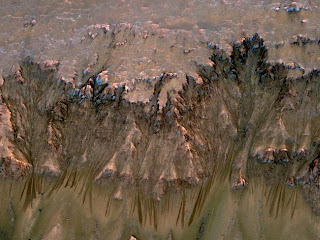
Oblique View of Warm Season Flows in Newton Crater
An image combining orbital imagery with 3-D modeling shows flows that appear in spring and summer on a slope inside Mars' Newton crater. Sequences of observations recording the seasonal changes at this site and a few others with similar flows might be evidence of salty liquid water active on Mars today. Evidence for that possible interpretation is presented in a report by McEwen et al. in the Aug. 5, 2011, edition of Science.

This image has been reprojected to show a view of a slope as it would be seen from a helicopter inside the crater, with a synthetic Mars-like sky. The source observation was made May 30, 2011, by the High Resolution Imaging Science Experiment (HiRISE) camera on NASA's Mars Reconnaissance Orbiter. Color has been enhanced. The season was summer at the location, 41.6 degrees south latitude, 202.3 degrees east longitude.

The flow features are narrow (one-half to five yards or meters wide), relatively dark markings on steep (25 to 40 degree) slopes at several southern hemisphere locations. Repeat imaging by HiRISE shows the features appear and incrementally grow during warm seasons and fade in cold seasons.

HiRISE is operated by the University of Arizona, Tucson, and the instrument was built by Ball Aerospace & Technologies Corp., Boulder, Colo. NASA's Jet Propulsion Laboratory, a division of the California Institute of Technology in Pasadena, manages the Mars Reconnaissance Orbiter for NASA's Science Mission Directorate, Washington. Lockheed Martin Space Systems, Denver, built the spacecraft.

Other imagery related to these new findings from the Mars Reconnaissance Orbiter is at http://www.nasa.gov/mission_pages/MRO/multimedia/gallery/gallery-index.html .

Image credit: NASA/JPL-Caltech/Univ. of Arizona

This series of images shows warm-season features that might be evidence of salty liquid water active on Mars today

Warm-Season Flows on Slope in Newton Crater
This series of images shows warm-season features that might be evidence of salty liquid water active on Mars today. Evidence for that possible interpretation is presented in a report by McEwen et al. in the Aug. 5, 2011, edition of Science.

These images come from observations of Newton crater, at 41.6 degrees south latitude, 202.3 degrees east longitude, by the High Resolution Imaging Science Experiment (HiRISE) camera on NASA's Mars Reconnaissance Orbiter. In time, the series spans from early spring of one Mars year to mid-summer of the following year. The images have been adjusted to correct those taken from oblique angles to show how the scene would look from directly overhead.

The features that extend down the slope during warm seasons are called recurring slope lineae. They are narrow (one-half to five yards or meters wide), relatively dark markings on steep (25 to 40 degree) slopes at several southern hemisphere locations. Repeat imaging by HiRISE shows the features appear and incrementally grow during warm seasons and fade in cold seasons. They extend downslope from bedrock outcrops, often associated with small channels, and hundreds of them form in rare locations. They appear and lengthen in the southern spring and summer from 48 degrees to 32 degrees south latitudes favoring equator-facing slopes. These times and places have peak surface temperatures from about 10 degrees below zero Fahrenheit to 80 degree above zero Fahrenheit (about 250 to 300 Kelvin). Liquid brines near the surface might explain this activity, but the exact mechanism and source of the water are not understood.

The series is timed to dwell two seconds on the first and last frames and one second on intermediate frames, though network or computer performance may cause this to vary.